
Staying together for the kids: what the evidence actually says
By Bert Deysel · 6 September 2026
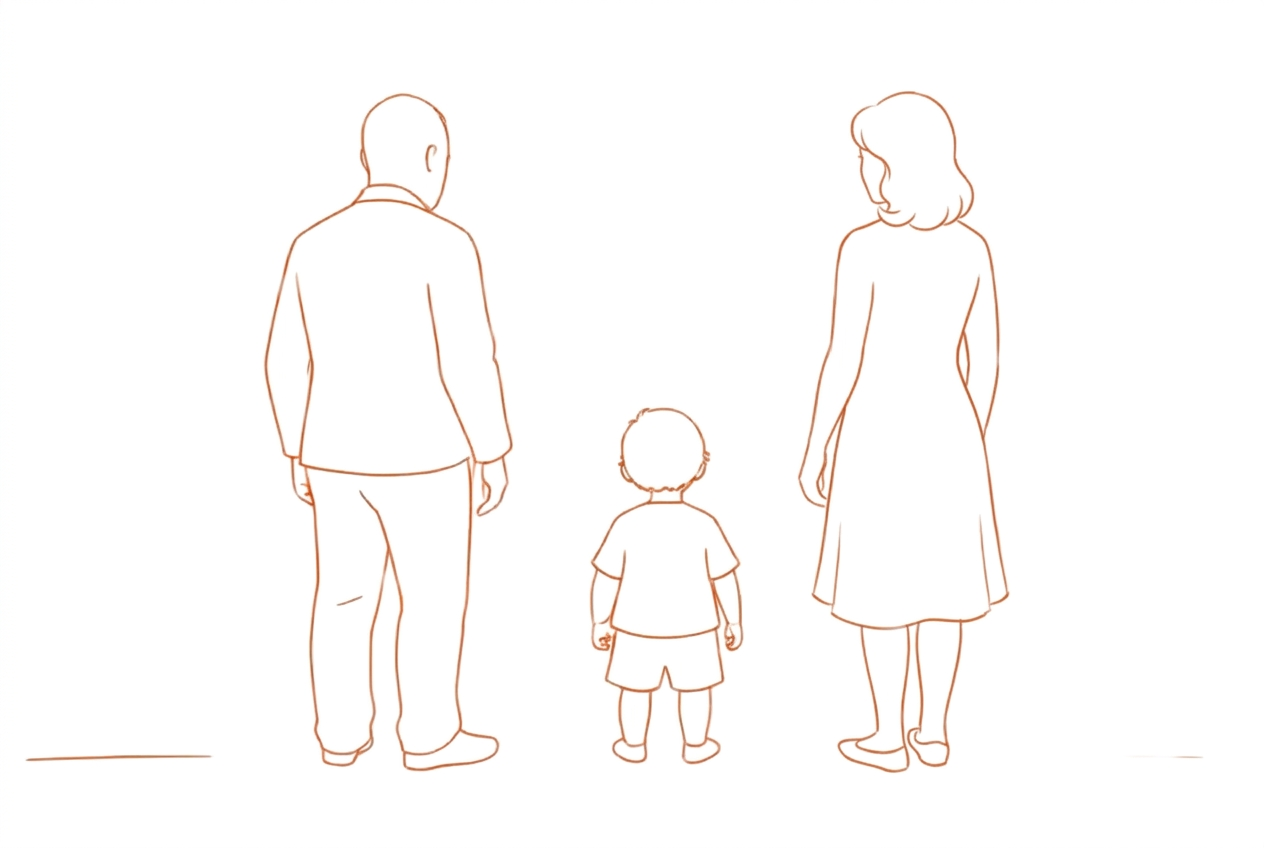
Almost everybody who asks me about divorce asks about the children within the first ten minutes. Usually the same sentence, more or less: I could do it, but I cannot do it to them.
I want to be careful here, because this is the place where people get told comfortable things. So let me give you what the evidence actually supports, including the parts that are not comfortable.
What the research says, plainly
Most children of divorce do not end up damaged. Across decades of studies, the average difference between children of divorced parents and children of intact families is real but modest, and most of it fades over time.
But the more important finding is this one: a large part of the harm attributed to divorce is visible in children before the separation happens. It tracks with the conflict, not with the paperwork.
Which reframes the whole question. It is not divorce versus staying. It is what the children are living inside either way.
The three things that actually predict how children do
- How much conflict they are exposed to. Not whether you argue — whether they see hostility, contempt, being dragged in, or the long freezing silences. Children read a cold house perfectly. They just cannot name it.
- Whether the parenting holds. A parent who stays warm, consistent and available protects a child through almost anything, in one house or two.
- How much else changes at once. Money, moving, changing school, losing a grandparent. The chaos does more damage than the separation.
Notice what is not on that list. Whether the parents are married.
So what does staying together for the kids actually do
It depends entirely on what you are keeping them inside of.
If home is warm and the marriage is quietly disappointing to you, staying is a genuine option and not a lie. Adults have made that trade forever and some of them do it well. You should just be honest with yourself that you are choosing it, not being trapped by it.
If home is hostile — arguments they can hear through the floor, one parent going cold for days, a child managing the mood of an adult — then staying together for the children is not protecting them. It is the thing they will remember. And a low-conflict separation is very often the kinder outcome.
Children do not need their parents married. They need their home to be safe and their parents to be steady. Those are separate things and it took me too long to see it.
The sentence to be careful with
"I stayed for you."
Nobody means it as a burden and it lands as one every time. If you stay, stay because you chose it. If you go, go without handing them the invoice.
What to do with this if you are in it
Do not decide off one bad month. Watch three things over the next eight weeks: how often the children see hostility, whether the two of you can repair in front of them, and whether you can still parent as yourself when the marriage is heavy.
If the conflict is dropping, that is real information. If it is not, that is also real information, and you now know what you are choosing between — which is not marriage versus divorce, but a hostile intact home versus a calm split one.
If there is fear in the house
If you are frightened of your partner, or the children are, this stops being a decision about a marriage. Go to the safety page.
Next step
The quick check-in takes two minutes. The Stay or Go programme gives you the eight-week trend instead of a bad Sunday. And if you want to work it through with somebody who has been on the inside of it, I coach on this.
Where do you actually stand?
Two minutes for the quick check-in, or twenty-five for the full baseline that scores all eight dimensions.